Showing posts with label participation. Show all posts

08 February, 2010

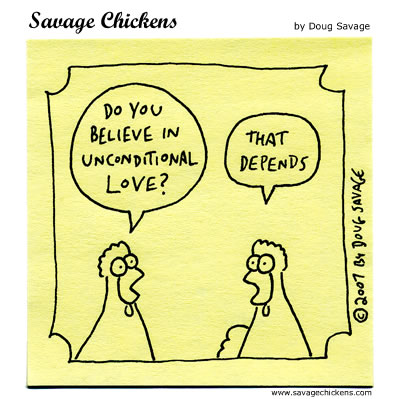
UNCONDITIONAL LOVE

J.M. Fields was a discount department store chain based in Salem, MA, owned by Food Fair, Inc. Most J.M. Fields stores were built adjacent to Food Fair's grocery stores and the two were in fact connected, making J.M. Fields the first true "supercenter" of its time. Customers could walk from the department store directly into the grocery store without having to go outside. (Thank you Wikipedia)

Finnerty’s Country Squire Restaurant was open for lunch, dinner and Sunday brunch and dinner. It was a ‘…well respected restaurant in the area with outstanding Prime Rib. …’ The interior was set up like a country inn with a fireplace in the main room.

While not my very first jobs, which included selling flower seeds door to door, babysitting and washing pots and pans in the local nursing home kitchen, J.M. Fields and Finnerty’s were the two jobs slated to be my key to freedom. My plan, after graduating from high school in three years, was to make one thousand dollars (which would mean I was rich) and set off to live ‘real’ life. I intended to work as many jobs as possible, for the shortest time possible, take the money and run. My longing to leave suburban Boston, my parents and their friends (all of whom seemed so terribly unhappy to me) and start my real life drove me so powerfully that I barely struggled with the biological pre-disposition to over-sleep that side-lined many of my friends. At that time, I was on fire with a desire to ‘finally start my life’.

In a way, those two jobs gave me what I hoped for. And more.

It was at J.M. Fields, working the floor as a bathing suit picker-upper, that I first saw overweight white women behaving in ways that made me wish I was a goat and not a person at all. I didn’t stop to wonder why I personally felt embarrassed at their obnoxious entitlement. I just knew that picking up the mess-strewn floor made me wish I wasn’t of their same species.
As the first just-over-eighteen year old female hired to work at Finnerty’s (Massachusetts had recently lowered the drinking age) I was hard pressed to find connection with the career-matrons who taught me the ropes. Tip distribution varied widely and I noticed from day one that hip-swinging and coy smiles put money in my apron that catalyzed severe glaring from my trainers.

The third job I worked was so non-memorable that I have to admit I can no longer remember what it was. From these three jobs though, I did take two important things. The money counts as one. Although I wasn’t ‘rich’ like I thought (Ahh the cruelty of a rude awakening. Sitting at our family kitchen table I’d begged my father to teach me about money. He’d refused by telling me there was nothing I needed to know. I erroneously believed him.) I did succeed in making the money I believed I needed. Because – like all beliefs – thinking something is so doesn’t make it real, by the time I was hitch-hiking across the country, I had thirty seven dollars and fifty cents. and a conch shell from St. Kitts, which I believed to be very valuable.

The other life lesson I took from my three jobs has turned out to be much more significant. I often found myself simply pausing to stare in wonder at my customers. This was not the most popular employee behavior but it eventually gave me the information I sought. Watching a woman’s exaggerated frustration when she stepped over a pile of bathing suits she’d just watched me watch her dump on the floor, I realized that if I wasn’t careful, I’d end up disliking her a lot. I was under strict, boss-enforced instructions not to voice these perceptions so I didn’t speak them. And in fact, it wasn’t the not speaking that troubled me. What did disturb me deeply was seeing that I was capable of actively disliking people.

Whatever cherished notion my parents may hold about our past, I saw their unhappiness as hate. In response to this, as a small child, I promised myself, vowed actually, that no matter what happened to me in my life, I would never become a hater.

And there I was, nearly hating a sweating woman with candy streaked kids, and I hadn’t even left home yet.

At Finnerty’s the waitresses needed to help each other. The trays were heavy. If a waitress was carrying a full load, she needed to make a graceful landing on the bussing tray quickly or she was liable to either drop a six-person ceramic dish dinner (each with two sides in separate breakable bowls) or bust her gut. The same night I got my first twenty dollar tip, after a married male diner waved away the assigned waitress and loudly asked for me, I came out of the kitchen with an overflowing tray. Three waitresses stood like gargoyles guarding a holy vessel. Arms crossed, they lined up in perfect unison, making access to the bussing station impossible. If I’d not been in pain, I’d have smiled at the choreographed symmetry of their motions. They were perfectly positioned to refuse my tray. In the moment it took for my eyes to make tears, I marveled at their incredible, non-verbal communication skills. I think I even thought a sad ‘if only’. Maybe they could teach my parents what I’d so obviously failed to impart about communication, despite my best efforts and hopes. As it was though, I balanced that sucker of a tray on one palm because my other hand and arm were fully occupied holding my shoulder blade. Years before, my brother had accidentally dislocated my shoulder trying to pull me out of the highchair when I was a baby. Periodically, with stress or strain, it would pop out in an excruciating burning not unlike a massive sting from angry, disturbed bees. My back was ripping at about the same moment my polite “Please get out of my way so I can put my tray down.” was receiving its antique-like stone response. I dumped the tray, jammed my shoulder back in with two hands, noticed the women's faces when the busboy rushed over to help me and two others raced to the debris with appropriate mops and buckets, and, after finishing out the night, quit my job.

So here I was again, not forty eight hours after my first brush with professionally located hate, feeling intense dislike for these mean women.

Fortunately, both of these events happened when I had just barely achieved my financial goals. And fortunately again, they both forced me to learn something that has stayed with me always: Hating is a choice.

Because I do not choose to live as a hater, I have to be careful about what I do and who I do it with. I do not want to hate the world. I do not want to hate people. I mean, let’s face it, I was a committed hippie. I wanted (and still passionately want) to love everyone. Even the man who taught a group of us to meditate, and who revered Meher Baba and his words, believed in love. I believed him until he tried to force me to have sex with him outside the room while everyone else breathed ‘Ohm.’. He said it was important to follow teacher instructions.

I could go on and on but I think you see my point. I choose to live not as a hater. I choose to orchestrate my life so I can love it. I choose to work so I can come from a place of service and love. I choose to write and make my art as an honest observer, which in my world is a deep sort of self love and loving gift. I choose honest, loving parenting. I choose to engage with my family of origin in as honest and loving a manner as I can imagine. And I choose not to be an idiot. I did not sleep with the teacher. I did leave the group. I did not attempt vengeance on the waitresses. I did quit the job. I did not grab the pudgy hand of the mother who littered bathing suits like a retarded three year old. I did pick up after her, and then, I did quit that job. I have loved and tried and yearned and begged and pleaded and communicated with my family of origin. I have also concluded that each of us gets to choose. We choose how we’ll be. We in fact, while knowing there are many things out of our control that we do not get to choose – like the three violent rapes I obviously did not wake up one day and choose ‘just because’ –choose our life stance. Certain things and events are what I’d label ‘not-chosen’ things. All the rest of it, and how we make relationship to those things, are choices.

In case I’ve inadvertently offended anyone, here is the definition of retard:

        retard - decelerate: lose velocity; move more slowly

Do these things make me an ‘Unconditional Love’ flunkee?

I think not.

What I do think though, is that love, unconditional love and choice are all constructs that merit a lot of exploration. I’ve been racking my inside self for years about all of this and I can honestly say that I do not feel we have yet created language that is fully capable of both the open ended-ness and the complexity to put names to these things easily. Sometimes a body of artwork touches it. Perhaps a glimpse in a reflective puddle that catches an image that holds intense beauty and dissonance simultaneously comes close. Sometimes a story written with just enough hidden authority that it dictates the cadence and tone for the reader, without being controlling, almost hits it. For me though, I experience the narrow band latitude of our words as an enormous challenge. Never-the-less, this challenge is one I want to engage with.

I do not think that everything exists on the same plane. There I’ve said it. I’ve written something that immediately starts the qualifiers running in my head. All explanations and parenthesis aside, I do think that there are contradictory and simultaneously true elements that take their abode both inside us – as humans – and in the world that we both know and don’t. Out of this, I’ll state that something may be true on one plane, and absolutely not be useful, applicable or accessibly true on another. If we accept this basic precept, figuring out how to live seems a lot more do-able.

On some plane, we are capable of loving always and completely. No matter what. I can walk anywhere and be blown away by the immensity of beauty I experience in every spec of every single thing. I can breathe out and imagine my breath as a love mist dancing with the world. I can also, at that exact moment, be terribly troubled because although I find abhorrent the tendency to take a small experience and extract it to a gross generalization, given the fact that I am a trauma survivor, I am often frightened of someone, simply by the size of their shadow. So, do I unconditionally love that human? At that moment? It seems not. At least not on this plane where I believe the aspiration away from prejudice to be essential. And yet. Were I not afraid, were I to start up a conversation with this individual, it would only be with the wisdom of hindsight that one could decide if I were an unconditional lover, ‘asking for it’ or just generally naïve and lucky.

I’ve thrown out all of these methods for judging. They simply have no value (other than recrimination that protects the pronounce-r from having to feel compassion) and they’re based on what I call ‘faulty thinking’. I hope that on some plane, which is so clearly not this plane - where we eat, shit, laugh and make war - my awe and curiosity about all things counts as unconditional love. I believe this to be true. But here, where my feet are - which was so aptly taught to me by a pink sneaker-ed girl many years ago when in frustration I asked her: “Where are you?” and she looked at me in surprise and almost pity as she said: “I’m right here. Aren’t you?” – is where I live as a human being in this body. And it is here, where I am questioning what we call love on this plane, never mind unconditional love on a larger scale.

I’ve never been able to conjure up the feelings people say I’m supposed to feel. I’ve honestly never wanted to cut the balls off the three different men who raped me. I’ve truly never wanted to hurt my mother for her denial nor my father for his episodic emotional viciousness towards me. I’ve not hated the women who slept with my (now ex) husband nor do I hate the woman who chose to forge long-term relationship with him when he was married to me and we had two children. I don’t hate my (now ex) best friend who left me when my marriage ended and I don’t hate the people who’ve benefited from my silence. I don’t hate people I don’t know and I can’t seem even to hate the man who stole my intended inheritance. I’ve tried to feel these things. But that’s just not what comes. Hating these people is what I’ve been taught I’m supposed to feel. I don’t. What does come though, is an utter bewilderment. A feeling alone and isolated because I do not hate in this way. When you think about it, this is kooky.

Just because I don’t hate these particular people doesn’t mean I never will. Nor does it mean I don’t have huge other feelings. I certainly don’t love the men who raped me and on this plane, where right this minute the hand-sewn leg-bottom of my awesome overalls just barely touches the top of my shoes (right here where my feet are), I have no intention of trying to do so.

I guess it gets really sticky when we mix actions and intentions. When I’ve been snarky with my daughter and I say I didn’t mean to and I truly didn’t mean to, she believes me. And vice versa. But if one of the men who raped me said he didn’t mean to, I’d be doubled over laughing in a super mean derisive way. I know my mother has not meant to hurt me. And I know she chose something that became the core of my wounding. So she both knew and didn’t know. The difference floating around in here has to do with what I call: ‘ Naming. Claiming. Validating. Apologizing if necessary. And engaging in a reciprocal, respectful, gropingly honest interchange.

On this plane, I vowed not to be a hater. And I vowed to tell the truth. I hope I succeed. I might fail. Sometimes the speaking of these truths is so painful. It’s hard for me to put these concepts into words. It’s hard for me to risk vilification and/or hurt reflections coming back at me. And some of what I have to say is probably pretty painful for some people to hear.

In my world, it is ‘unconditionally loving’ to communicate, question and choose, and it is selfish and/or enabling not to.

30 January, 2010

AND and FINDING GRACE

        With the profound and moving responses to my recent blog post: ‘Difficult Questions Are Not Always Cryptic’, it seems a good time to edit, rework and add this to the soup.
AND and FINDING GRACE
        The first time I consciously decided to walk away from ‘grace’ was in 1977, a couple seconds after Best-Friend-Annie told me I had none. Over the years since then, I’ve tried to convince myself that she threw those words at me because she had sex with my boyfriend. It’s not true though. I cannot actually remember what particularly ungainly best-friend maneuver I failed, but I know in that instance, she was sincerely—albeit woundingly—trying to contribute. Knowing I had no grace might have helped me, if I was graceful enough to acknowledge I wanted some. I wasn’t.

        As I edit and cut my way back through this piece, five years after its inception, there are a few inserts necessary to keep it as honest now as it was then. So: It wasn’t until I realized I was actually going to be in my fifties that I began this particular grace-wrestling.

        Since then however - often to my dismay - I find myself grappling with grace. Let me assure you I’ve never before been one to recognize a calling of this sort. I squirm when people play catch with the spirituality words. Destiny and acceptance have shared the taboo in my psyche. Perhaps the fact that I’ve survived three violent rapes in my life has made bedmates of odd ideas. Whatever the origin, usually when people blithely mention acceptance and religious brushes with grace, I’ve found myself visualizing victimization.

        So why tackle grace at all? It certainly isn’t my favorite subject. I can’t lay claim to expertise. And it’s clearly not at all a state I feel I have attained. But somehow it seems as if my whole world requires it. It’s touchy to write about something that previously held residence in my most cherished set of things I don’t believe in.

        But I have this theory. It evolved out of an earlier philosophical stance I held on to for dear life. I used to think that I was different. Alien. Outside. ‘Other’ than regular people. Therefore if I felt concerns, thought particulars, perceived matters that other people didn’t overtly react to, I could still make sense of things. It wasn’t that the other people were blind—as it appeared to me—but just that I was not like them. This way, if something terrible happened, others lack of reaction, in contrast to my extreme response, could reside intact within my philosophy. It was great. As long as I saw myself as separate and unlike most humans, no one had to be crazy in order for things to make sense.

        I was wrong though. We’re not so different. I am not a visitor from an alien planet. I’m not a weirdo who reacts bizarrely to hurtful encounters. It’s just that I’ve always seen people’s pain as a ‘something’ that requires help. Here’s the kicker. Everyone else does too. It’s just that somehow talking about it and writing about it seems to necessitate a form of action that many people seem unwilling to live by.

        I’ve had to let go of my philosophy of otherness. Thus my current knowing: All humans are markedly similar. Therefore, if I feel something, other people probably do too. What we choose to do about this seems to be up for grabs. The antithetic behavioral choices are indisputable, but the origin of these disparities is not because of some innate individual deviation.

        Pit stop here: I have to admit that I had such a good time stringing the above sentence together that for a few blissful moments I just let the cadence and symmetry carry me along. The sentence makes sense and states exactly what I intended. But just in case it’s too twisty, obtuse or otherwise alienating in some obnoxious way, I’m moved to translate: It’s obvious that different people make different choices. The point is that these choices are sometimes shitty, mean, and self-serving. It doesn’t work to try to explain this away by believing the stinkpot is organically stinky and therefore can’t help the stink. Nor does it fly to blame the boogieman under the bed. The reality is, we’re all humans. And if everyone would just try hard, our lives would work better.

        Accepting the fact that I’m a human like everyone else (which I now unequivocally know that I am) calls me to practice the fine art of grace. Otherwise, how can I bear our dishonesty? How can I live with the fact that asking for help often elicits rejection? And truly, without practicing grace, how can I survive? Knowing that when we feel how bad we feel—when we hurt someone we love—it’s so excruciating that most people would rather pretend it away than accept accountability and apologize?

        The outgrowth of my current theory is fairly straightforward as long as I am able to tolerate the fact that it negates my previously cherished notion of my own ‘otherness’. Here it is then: I have to practice grace in order to participate as a member of our gregarious species. We all do. And we need grace in our culture, perhaps as never before.
************

        My big brother sneaks into my room almost every night. He sits with his arms wrapped around his knees. His cheek never gets poked by the plastic seam on my purple flowered chair because he keeps his head up. Even if he’s crying. Which he does a lot but since I love him, I never tell anyone so he doesn’t get teased. I’m so glad he shares his secrets with me. He’s my big sad brother. I know he’s my best friend. I know this because he lets me see his tears.
***
        I’ve been married almost twelve years when Hurricane Andrew (1992, I’m 37 years old) hits Martha’s Vineyard. My big brother and his family are here visiting from California. His children, my children and my two baby goats are all playing in the laundry room off the kitchen. I get to have all the kids in the house because it’s dangerous to be outside. There’s a howling in the space between the screen door and the wood. The clothesline looks treacherous and empty. It’s dark at two in the afternoon and my marriage is ending. I’m trying not to mentally chant the: “end of life as we know it” line in my head. I pretend to myself that it could be funny to use my tears instead of salt in the potatoes. The swollen places around my eyes undermine my efforts to provide a lovely time for my company. The wind sounds sharp like crazy women in the back ward at McLean Hospital. My big brother can’t control the storm but I imagine him saving me. “I’m afraid my marriage is over.” I wail, and I’m sobbing. My best-friend-big-brother David yells at me “How could you?” before his full volume hits. “You’re ruining my vacation.”

        The wind evaporates my wet face and when the tree fell on his car, the final ending of my marriage kept pace with the Woods Hole Towing Company.

***
        A full half way through my fiftieth year and my brother’s twenty fifth wedding anniversary is tomorrow. My youngest daughter has just had surgery with unusual complications. This is the first weekend day in over a month that is unscheduled so I am anticipating a much needed sleep-in. My phone rings at 5:45 AM. When I hear my brother’s voice I am disoriented. The years and dates and even life-stories slip around in time. His voice is clear. It’s my big-brother-best-friend and I’m so lucky he talks to me. I can smell my purple flowered chair and almost touch my childhood ballerina wallpaper. “I’ve got to talk to you.” my brother tells me. Here in my bed, my body tries to figure out the three hour time difference and how it can possibly be him. (But my heart …) “I need your help.” he whispers. “My marriage is in trouble.”

        We’re on the phone for almost two hours. I try to ask gentle, evocative questions. Drawing on my professional time as a couple’s therapist—without using alienating psycho-babble—while I’m half asleep and needing to urinate, is a challenge. I want to do it though. It still feels like an honor that he’d choose me.

***********
        The internal head taunting holds off until Tuesday, three days after my brother’s call. If there could be a script for each of my perspectives, it’d have to be a multi-act play with a revolving cast: “You’re such an idiot. Remember how he treated you?” “God I hope he’s okay. I wonder how it went.” “I’ve always known he misses me too. It’s so great to have heard him.” “But he screamed at me.” “I don’t want to moan out loud.” “I never meant to ruin anyone’s vacation, I just wanted him to help me.” “I’m glad he asked me for help.” “I wonder if I was helpful. I hope so.”

        The amazing thing is that all the perspectives are true. Simultaneous, contradictory perceptions. All connected by a precious little word called ‘AND’.

        Sometimes I think that my body is the bridge that links the emotions of the past to the emotions of the present. Without the ‘AND’ word I’m afraid I’d split in two.

        Holding all the dichotomies inside my head isn’t all that painful. It’s not until I really start to dissect that I realize there’s something important hidden around my big brother story. It’s a something that has to do with grace. The content could be any life story where what we receive and what we give are out of whack.

        Right here I run into a quagmire of thoughts that would take a book to elucidate. So. In short form, let me start with the thought that currency in the context of relationship makes me want to vomit. And. Currency is an essential aspect to relationship.

cur-ren-cy n. pl. currencies
        1. Transmission from person to person as a medium of exchange
                
The American Heritage Dictionary of the English Language, 4th Edition

        The choice to include this definition was a big one for me. Of course there is a number 2 and 3, as well as the etymology. What I found fascinating was that until 1699, when John Locke extended the meaning to include “…circulation of money …” the word currency implied more of a flowing between. Somewhat like a river moves. Or maybe, as I thought, in the arena of how energy flows between humans when they engage in the heartfelt trying required to live.       

And consider this quote from: ‘Mutant Message Down Under’ by Marlo Morgan
        “That brought up their definition of a gift. According to the tribe, a gift is only a gift when you give someone what the person wants. It is not a gift if you give them what you want them to have. A gift has no attachment. It is given unconditionally. The persons receiving it have the right to do anything with the gift: use it, destroy it, give it away, whatever. It is theirs without condition, and the giver expects nothing in return. If it doesn’t fit that criteria, it is not a gift. It should be classified as something else.”
        So if we’re thinking about the exchange that occurred between my brother and I, did I give my brother a gift? Or did I enable? And further, since I believe I enabled by omission, do I want to consciously choose to contribute to a denial that has been passed down in my family, certainly through my immediate family of origin but perhaps for generations?

        What I’ve come to see is that I did not give my brother a gift. If I use the ‘Mutant’ definition (which I love) than there was no gifting going on at all. Nor was I acting in grace, as I’ve been taught to understand grace. It’s odd in a way. I did ‘turn the other cheek’, and I did ‘unto my brother as I’d wish him to do unto me’. Except. I wouldn’t. Want this. I don’t think it is grace to rob a loved one of the truth. And the truth is he hurt me terribly in the past. He never acknowledged it. Nor did he apologize. He did ask me to wake up and be a loving listener (which of course I want to be) without ever asking me if it was okay or even how I was doing. Unquestionably, I love my brother. Out of this love, I chose to give and ‘forget’. Except the forgetting didn’t hold. I do not believe it graceful. What I think is that in those moments I was too selfish to risk my own discomfort by speaking the truth in its complexity. I, in fact, robbed him of the opportunity to be a part of a loving reciprocity with me. I do not think this sort of robbery graceful. As I said, I cannot pretend to be a grace expert.

        We’re taught that if we live with grace, good things will follow. My truth is that when I am my most graceful, often others really dislike the truths that come with the territory. And many times, they dislike me in the process.

        When someone hurts us, grace requires us to address it. To speak the reality of the wound. True grace then exacts the ‘hurter’ (whether deliberate or not) to acknowledge what has happened. Further, grace extols an apology.

        Whenever we take a human interaction out of a continuous contextual time-line, it can appear lopsided. It is also true that when we experience a particular human interaction, in the moment, we are out of a continuous contextual time-line. We are in a moment with the other person. It takes grace as I now understand it, to both hold the history and be in the moment.
       
        And here again is the amazing little ‘AND’ word.

        Somehow we need the ‘AND’ in order to practice grace. The ‘AND’ allows us to disclose the truth. Without it, communication gets pinched and squeezed-in, unilateral, one dimensional, boring, and it’s a lie. Telling the truth, in all it’s messy, contradictory, beautiful complexity, is a graceful thing to do. Non-disclosed truths (lies), are the opposite. Lying promotes violence. What’s missing, omitted, pretended away, made unimportant or rendered invisible, still simmers below the surface or on the far side of a blink. This underbelly has an unfortunate propensity. It interferes, interrupts, causes a schism, becomes a separation. The omission blows up, erupts and is often violently destructive. Truth with an ‘AND’ could potentially be a graceful promoter of peace.

        But how do we practice grace if one of the requirements is truth-telling and truth-telling is deemed so socially unattractive? And perhaps more complicated, what if what I was taught about grace, what I’ve tried to live (since the teachings and trying-s have often involved a socially enfranchised – polite – kind of lying) isn’t graceful at all? What if the gift I gave my brother, by supporting him through his marital woes, when he utterly slammed me through mine, was in fact, the opposite of grace. What if giving a gift, before a wound is acknowledged, is morally wrong? And damn it. What if grace, living in grace, moving with grace, dying gracefully, all require a trying – a truth-telling – that shows our fallibility, our fumbling efforts, perhaps involves losing precious people we love to our depths? Because what if grace is only sometimes beautiful (the way we in our culture, understand beauty to be) and more often messy, ugly and downright unattractive? And finally, what if living with grace means being generous enough to let our loved ones reap what they sow, even if it breaks our hearts?

14 January, 2010

Difficult Questions are Not Always Cryptic

          I’m afraid I live a series of difficult questions. Challenging really. Predictably socially unpopular and possibly downright incriminating.

          It’s almost a year now that I’ve been fighting the good fight. Every skill in my repertoire has been employed. The eradication of not only my questions but all related thoughts and feelings has been attempted. I have to admit that these efforts have been made not only by me but sometimes at me by members of my family of origin.
          So. My blog has no recent entries. My movie script waits for its third draft to begin. My evocatively crafted fifty page article - the meat and heart of my book proposal - hides under a neatly folded pile of laundry on my bureau. ( This is no small feat. It took careful time and attention to match each corner of the fitted sheet perfectly.) My eight hundred and fifty page prose-poem memoir (perfect standard book length for this form) hides up on the shelf behind my lifelong collection of stuffed Eeyores. The memoir deconstructed and reconstructed in traditional prose form hangs, section by section, in a vertical, galvanized metal magazine rack. The entire body of work, re-crafted as a complete, mixed-genre theatrical performance with both musical and dance scores, nearly radiates in its special high gloss plastic envelope folder that fastens with a particularly nice string detail. The exquisite illustrations I commissioned for this work hang framed in my kitchen, their only adornment an occasional over-dusting of non-gluten flour from my pink KitchenAid mixer. The film documentation of the first performances, still unedited and without form, wait in their mailing envelope. The artist who performed my written words out in Washington state has yet to send me her words and images.
          As you can see, I’ve put the brakes on all projects. I’ve stopped anything that could force these difficult explorations out of me and into the public arena. I’ve tried overwork and under work. I’ve tried distraction, denial and food explorations. I’ve even tried dating. Never one for the easy road, I’ve also taken on new interests, learned new skills, engaged in conversation and begun a spiritual practice of sorts. I’ve built a small building, laid a complicated brick patio, stacked three cords of firewood.
          And through it all, the drumbeat of my questions has continued. They bang at my heart, moment by moment.
          So. I give up.
          Into the public arena I come, questions splayed.
          Because if my words simply refuse to go to nowhere then they have to be somewhere.

          Of course, you dear reader, cannot possibly know this but it’s been days since I wrote the above words. I simply got so frightened that I hid this draft on my desktop and under the deliberately closed cover of my computer.
          Well, now that I’ve completed my tax preparation, Face-Book-ed myself until there is no unknown detail about any of my virtual ‘friends’, cleaned and cared for my birds scrupulously, the only other possible avoidance I can reasonably employ would be shoveling the snow that truly is melting on its own in the rain.

          Here then, is a first stab at articulating some of the disputes railroad-ing through me.

          Ah, the enigma of the mind. What an extraordinary journey it is to be a person. Each time I get close to enunciating - never mind writing - and then God forbid posting, I find another important diversion. For example, because words matter to me - so much - I want to choose each one with care. When it came time to use the word ‘questions’ again, the Language Arts teacher I carry in my head from childhood wagged her finger. So back to my favorite book - the Thesaurus - I go. There’s a lot to say about the word ‘questions’. Many different ways to look at it. The antonym appears to be (in a nutshell): denial. This is good. Engaging with denial has been a driving force in my life and a true source of angst which informs my work.

          And thankfully, this brings me full circle to the questions at hand.


#1           There. I’ve labeled it (this yet to be written) number one. A musing of sorts. With hopes that my words will turn out to be a catalyst for engagement and conversation. So. Again:

#1           Is it ever deeply true that people ‘can’t’ grow in their consciousness and communication? Or is it, as I believe, always a choice? Perhaps a choice that is not readily accessible. Perhaps a choice that feels (or is believed to be) difficult, uncomfortable or downright formidable, but still - when all is said and done - a choice.

#2.          Here we have the bathroom break moment. Now. I’m ready to try again.

#2.           If the life story of a writer/artist dictates a palate (the raw inner truth-material from which to draw) that includes three (yes 3!) violent rapes, and it feels inexorably important to put the work into the world - to craft something beautiful and useful and important - is it possible to do this in a manner that pushes through all the (unwarranted) shame, familial / cultural denial, and incredible fear, and make the work magnificent?


#3.          If, out of incredible trauma, the writer (me) has spent her life both living a vicious form of PTSD (Post Traumatic Stress Disorder) as well as treating people with PTSD for twenty four years, and if, during this time, she (Yup. Me.) has come to understand that the environment into which one is received after trauma is the single most important factor in determining the formation, duration and severity of said PTSD, and if the writer is willing to write her own life story as a gift for others, and finally, if doing so will potentially hurt the feelings of her family of origin (particularly her mother) and also could possibly facilitate a moving through of the systemic, multi-generational denial that has ruled the family, should she deny her own integrity and not do it? Or should she (as I vehemently believe) do the work that her (my) moral compass dictates?

          Okay. I’m getting there now. A couple more statements of questions and maybe this heart-pounding, palm-sweating, PTSD enhanced fear will subside.

#4.          If the relatively easy screenplay to write is one where the main character is violently raped three times and then sets out to prove that “There’s No Such Thing As A Wrecked Life” but the true story is that the main character - by being born into, witnessing and being profoundly wounded by her mother’s denial - sets out (from childhood on) to prove that how humans experience and make meaning of their lives is a CHOICE, and from this, she embarks on a quest to prove that any life can be magnificently lived, and in the process she is violently raped on three very different occasions, and she continues on to prove that people can choose not to be ‘haters’, can choose to live examined and conscious lives, can choose to live in love and sometimes joy (though these choices are difficult), should she (as I now believe) write the more difficult / more true / more beautiful / much less ‘black and white’ / teeming with fallibility and humanness script? Or not?

          Whew. It’s an incredible challenge to get these non-linear questions into linear form.

#5.           Is it true - as our culture and many families exact - that when a person has tried with everything inside her, to communicate her truth (yup. this is me), and she has been systematically denied by her mother, that caring for this mother through the last stage of her life and on to death, is the morally right thing to do?

#6.           Do we, through our trying, earn our relationships and everything that follows (and if we don’t try, then reap whatever this non-trying sows) or do we get to choose denial and unconsciousness through our life and then as we age, expect / demand / extoll the care we think we deserve anyway?

#7.           And in my fear I have to add this number seven. Is it possible - while sounding callus and downright selfish and unwilling - that one’s own integrity dictates what we want and are willing to do?

          Which leads me to number eight.

#8.           Why do we enfranchise the entitlement and dishonesty of the: “I can’t do it.” with a response of understanding?

          And contrariwise, why do we disenfranchise the honesty of the: “I will not do this because I believe it is wrong.” with a response of rage?

          Even if the “I can’t do it” is a convenient lie and the “I don’t want to do this” is a truth ripped right from the guts of a wound - whether an acknowledged wound or not (Here’s a chapter title from my as yet unpublished book: 'A Boo-Boo Is Still A Boo-Boo') - , somehow the articulation of a desire or the lack thereof seems to elicit a battalion of responses while the disowning of desire elicits an overt complicity.

          So now I’ve done it. Put the morass into words.


cryptic  [krip-tik]

–adjective Also, cryp
tical.
1. mysterious in meaning; puzzling; ambiguous: a cryptic message.
2. abrupt; terse; short: a cryptic note.
3. secret; occult: a cryptic writing.
4. involving or using cipher, code, etc.
5. Zoology. fitted for concealing; serving to camouflage

e
radicate  [i-rad-i-keyt]
–verb (used with object), -cat
ed, -cating.
1. to remove or destroy utterly; extirpate: to eradicate smallpox throughout the world.
2. to erase by rubbing or by means of a chemical solvent: to eradicate a spot.
3. to pull up by the roots: to eradicate weeds.
Synonyms:

  1. obliterate, uproot, exterminate, annihilate.
Integrity: noun

1. adherence to moral and ethical principles; soundness of moral character; honesty.
2. the state of being whole, entire, or undiminished: to preserve the integrity of the empire.
3. a sound, unimpaired, or perfect condition: the integrity of a ship's hull.


12 February, 2009

Social Networking

I’m not so sure about this technological social networking foray of mine.

I watched from the sidelines for a long time. Everyone seemed to be singing praises for virtual land. The benefits were flouted while I watched people’s fingers peg away in some asymmetric tapping rhythm that’s not familiar to me. I’d find myself drifting off with the beat of it. People were talking to me, and to whoever was on the other end of what they were sending. All at the same time! I consider myself a pro at doing chores while I’m on the phone but it’s not the same. Dancing a newly washed floor dry with rags rubber-banded to slippers doesn’t use the same part of my brain as talking. But multiple conversations? It’s so … well I’m trying to figure out what it is. Sometimes I think it is the rhythm of fingers on keys that calls to me. It’s a sheer audio of movement you can barely hear and yet it evokes the feet of Gumby and Pokey which somehow softens the insides of my ear drums. I suppose it could be nostalgia but I actually think that hearing in the perfect register makes my world hum better.

Embarking has been amazing though. Lets face it. The web is the perfect locale for someone who’s compelled to go forward while simultaneously obsessed with deconstructing every nuance of every angle that could possibly be connected to every miniscule detail about where it is they’re going. And again, I’m not trying to narrow things down. I’m just attempting to craft a voice, find a cadence, sing out like a ‘Polly Anna’ scamper, and ultimately have a conversation with the world.

It’s a challenge though. You see, I’m a woman that has a routine. There. I’ve said it. I do. I like to follow some set of something. At least when I first wake up in the morning. And this itself is a phenomenal fact, given that I’m super independent. But I do. Like to follow something. I used to wish I had a hero. When I was younger I wanted to be like all kinds of different people. I planned to be a Florence Nightingale to the sad. A Dr. Albert Schweitzer to the ignored. Some kind of Heidi of the heart. A lover of goats. The artist who’d bring beauty to blind people. A sculptor of any material. I used to lay on my bed and plan how I’d be the one who’d take a mountain of bird-poop and bring such magnificence to its’ description that the sheer irrepressible beauty of it would be indisputable. Now though, I’ve simplified. Age does that to a woman. I just need to make sure I take my shower before I start my day. That’s the extent of my routine.

But I’m blowing it. Since I’ve started this reaching out to the Netherlands of virtual-ity, with only my fingers on this twelve-inch keyboard, I find myself sitting here, grabbing and typing my thoughts before I’ve even washed the sleep grit out of my eyes.

It’s just that there are so many questions. So many things to ponder. So I’ve decided to jump right in and do something about it. As soon as I figure this out, I’ll go take my shower and be right back on track.

I’ve typed and deleted, deleted and typed. I could take up drumming with all this non-melodic practice but instead, I’ve decided to start a column. A ‘Dear Abby’ of sorts. I’m excited. I’ve had lots of years to develop a repertoire of voices, a veritable chorus of perspectives. A column seems a great use for it all. A written give-and-take will allow all-of-you to ask all-of-me, any of the myriad questions that seem important. And nothing will be lost. Because they’ll be a multitude of you. And this techno-writing medium allows for the full extent of me. I’ll listen to my fingers as they make music on the keys.

I just realized that I’ll need a pen name. Any good columnist knows this. A ‘Ms. Something’ that evokes an omnipotent Mommy.

So here’s my plan. First I'll choose the name. Then I’ll take my shower. This way, by the time I come back, the questions will be waiting. Here. Right on my screen. And then the many me’s will type their answers. This could be a rest-of-my life kind of routine. If I can answer all the inquiries, maybe the Don Quixote wannabe of me will finally be satisfied. I do want real questions. But if interactions are low, I can long for conversation enough to do it on my own.

I need a name though. All suggestions welcome. I’ve tried on ‘Dear Andrea’ but it’s just too singularly impaired. That’s the problem with the ‘Dear Abby’s’ or ‘Miss Manners’ of the advice world. I read those columns and I can’t help but wonder whether they’re freshly showered before they respond. It’s true you know. Without some sort of routine, things can fall apart. And then there’s the fact that people’s perspectives are enhanced by all sorts of odd variables. Did you ever wonder just who ‘Dear Abby’ is? And what about ‘Dr. Ruth’? Even Dr. Phil has to be a real man sometimes. I don’t begrudge advisors their humanity. I realize it’s important. I just want to be sure there’s a place of reflection going on, before their words become my guiding light. So if my column is going to fly, the name people write to needs to sound reliable, many dimensioned and at least occasionally wise. Anyone could do it. I think you just have to sort of bounce around inside, until you find the part of self that holds an answer or perspective on whatever’s the issue of the moment. We all have this. Parts of self. It’s something about our species. A way of being fallible in our conscious mortality while being wise in our limitless potential. So the name has got to be encompassing. Not too egotistical. And certainly not unduly biased. Rigidity would guarantee a lack of readership and wishy-washy would disappoint. I need a name that’ll cover all the bases, without presuming anything that could be construed as offensive. I feel like I’m fighting the cosmos here. I want something elegant. I wish for something sale-able. Denying this aspect would be like hocking a loogie out a pickup truck window on a high wind day. They just blow right back in behind your head and land on the rear facing window where they slowly, in full view, ooze their way down. I hope I find something on Google. I’ll look up ‘multitude’, ‘many faceted’, ‘conglomerate’, and maybe ‘conundrum’. The thing is, to feel confident in the replies, people have to like whom they’re addressing and each of these names has flaws.

I’ve got some ideas. Right now ‘Ms. Possibility’ sounds good to me. And ‘Ms. Multi-Genre’ has sort of a nice ring. I like ‘Ms. Everything-Counts’, even though it’s kind of long. It’s a challenge to find something that says it all and still holds a syncopated cadence. The truth counts here too. I can’t have a name that implies anything dishonest because lying begets a kind of denial that’ll make me want to quit this job and I don’t want to stop before I’ve all-the-way started. How about ‘Ms. Borscht’? I like soups. Stews are my specialty, particularly when they make exquisite flavor out of an odd mix of apparently disparate ingredients. ‘Ms. Mambo’ keeps flashing in my brain. Mambo. Hmmm. It brings to mind all sorts of places and foods that carry a multitude of perspectives. This could be good. Mambo reminds me of the ‘Jambo’ (hello in Kenya) from when I spoke at a U.N. conference in 1981. The goat stew I choked down to be polite in St. Kitts in 1978, the dance I dance when I’m belonging, and the generally large, swaying body size I feel when I’ve overeaten. I’ve just looked it up and it seems right:

mambo (mäm) noun pl. mambos -·bos
a rhythmic musical form, of Caribbean origin, in 4/4 syncopated time and with a heavy accent on the second and fourth beats
  1. musicians' slang term equivalent to “riff” (emphasis mine)
  2. intransitive verb to dance the mambo
Riff sounds good. Almost like a jam of thoughts. Drawing on every possible frame of reference I possess. Because when I start getting letters, ruminations, questions, and musings of many sorts, I plan to reach into the abyss of every possible identity I’ve ever touched and bring that to the page.

23 January, 2009

Shameless Begging

I want. I want. I want. And I’m too old to be cute in the raw, undiluted land of desire.

Lest you jump too quickly from my ‘wants’ to the mental island of sexuality, let’s first look at what happens if you leap there. You could say this leap is an arch, a powerful motion, a catapult that shoots brain synapses from one state to another, an elevator up the ladder of inference, a rocket-ship of assumption. Any way you phrase it, it’s a high speed motion from a simple word to an assumed understanding that may or may not be what was intended.

Lets assume you make the bound across. You read or hear or think ‘want’ and arrive at sexuality. The path is fraught with landmarks. Suppose I say that the propensity to jump from my simple expression of a feeling: ‘I want’, to the mind state of sex, comes from the wired cluster of linear connections that ultimately keep us all relatively immobile. It starts with our thoughts. Thoughts lead to words, and words to interaction, and interaction to assumption, and assumption to belief, and this huge galloping mouthful of word connections leads to sex. I know it doesn’t feel immobile when the endorphins are fairly abuzz with possibility but think about locale: against a wall, over the kitchen table, draping the couch, horizontal in bed. Sure looks static to me.

But what makes something true? If everyone thinks that the word ‘want’ refers to sex, does it? This takes me back to a 1970’s feminist group process issue: ‘Consensus Agreement’. A phraseology capable of subverting an entire culture. ‘Consensus Decision making’ is a group process, not unlike ‘Robert’s Rules of Order’, except that by implication, everyone has to agree to agree in order for anything to happen.

So, back to the question. From a consensus perspective, everyone agreeing should make something true. But what if what many people think originates from information that indicates faulty thinking? Doesn’t this mean that the popular opinion could be wrong? There are lots of ‘wants’ that are not based in sex.

Okay. I admit it. A feminist origin is hard to leave behind – even if I wanted to – which I don’t. I do think it’s sad that ‘wants’ and desires are so often marginalized into the sexual arena when, in fact, we can find so many other places to go with it all. But no need to worry -- these other places can still evoke plenty of shame.

Wanting. I’ve never met a person that doesn’t. And yet, we’re taught it’s something we’re supposed to outgrow. And certainly by the time we’re old enough to be a parent, dye our hair, or eat out alone, wanting is supposed to have evaporated in direct proportion to the massive amounts of chemicals in our non-organic food. That is, unless the wants are in a sexual arena, where the natural ebbing and flowing of desire is supposed to increase when you’re wanted and decrease when you’re not.

But. I do. Want that is. In fact I want often. I want a lot. And it is not about sex.

What I want right now is to figure out how to solicit HUGE numbers of people to read and interact with my blog. And this brings me right back to the place I started. Is there such a thing as ‘shameless begging’? Is this an oxymoron? Is it what I am doing right now? What if it is ‘shame-filled’ but I’m doing it anyway? Maybe I disagree with the tenet that it’s shameful to beg. Maybe I think that shame is based on faulty thinking.

I want. I want you. I want readers to interact with my work. Please.